GREEN LIFE Association joins FERRO to advance the restoration of Romania’s Reci oxbow lakes
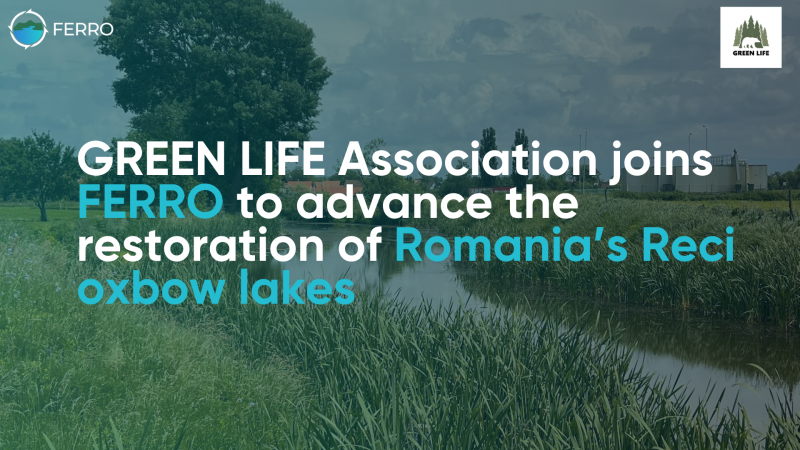
Following its successful application to the FERRO Open Call, the GREEN LIFE Association officially joined the project in July 2026, bringing the Reci and Comolău oxbow lakes in Romania - one of FERRO’s three associated regions - into its efforts to support freshwater restoration and the recovery of valuable aquatic ecosystems.
Established in 2020, the GREEN LIFE Association works to support environmental initiatives, sustainable development and eco-friendly solutions. Through the RECI-OXBOW initiative, the association focuses on the ecological rehabilitation of the historic Reci and Comolău oxbow lakes along the Black River in Covasna County, which are part of the Natura 2000 network. These wetland ecosystems face significant challenges, including hydrological isolation, sediment accumulation, eutrophication and biodiversity loss.
The initiative brings together local authorities, including @Reci Commune Hall, environmental experts and academic partners from @Sapientia Hungarian University of Transylvania to develop a replicable wetland restoration model for Central and Eastern Europe.
The GREEN LIFE Association and its scientific partners are conducting an intensive 12-month water quality monitoring and laboratory analyses to assess seasonal changes in the Reci and Comolău oxbow lakes. The latest assessments point to significant biogeochemical changes driven by end-of-summer biomass decay and sediment processes. The results identified so far, indicate that accumulated bottom sludge remains an active source of oxygen depletion and internal nutrient release under low-oxygen conditions. Addressing decades of sediment accumulation and nutrient pollution is therefore essential to improving water quality and supporting the recovery of these vulnerable wetland ecosystems.
Building on these results, RECI-OXBOW is investigating smart sediment dredging and biotechnological interventions to address the identified pressures and improve the lakes’ ecological condition. Through FERRO, the Romanian associated region will contribute to a broader European exchange of knowledge on freshwater restoration, helping explore approaches that could inform the rehabilitation of vulnerable wetlands elsewhere in Central and Eastern Europe.