Floating treatment station reinstalled at Vrchlice Reservoir to support water quality restoration
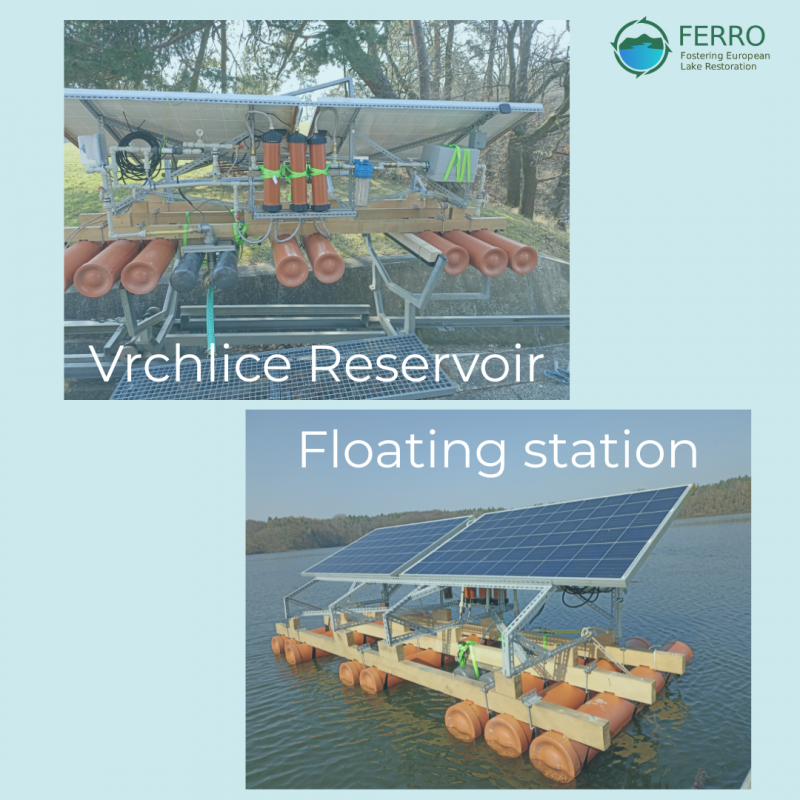
On 18 March 2026, the floating treatment station at the Vrchlice Reservoir in the Czech Republic, was reinstalled as part of the activities carried out within the FERRO project. The station was first set up in 2025 to begin testing restoration measures, but it was removed during the winter season. With the arrival of favourable weather conditions, the station has now been placed back on the reservoir to continue its work on improving water quality and enabling the recovery of valuable resources from this eutrophic water body.
In the past years the Vrchlice Reservoir has faced increasing eutrophication problems, particularly due to internal phosphorus release from bottom sediments. This internal loading has contributed to elevated phytoplankton biomass and raised concerns about maintaining the high water quality required for drinking water production. Addressing this internal source of nutrients is therefore essential for the long-term stability of the reservoir ecosystem and for safeguarding its role as a reliable drinking water resource.
The restoration activities carried out within FERRO aim to reduce internal phosphorus loading while supporting sustainable nutrient management and resource recovery. The floating station operates using a solar-powered pumping system that transfers phosphorus-rich water from the hypolimnion to the surface. The water is then passed through a filtration unit where phosphorus is removed before the treated water is returned to the deeper layers of the reservoir. The captured phosphorus is collected and prepared for potential reuse, contributing to circular economy approaches promoted by the project.
The seasonal deployment of the floating station demonstrates how innovative restoration technologies can be tested under real conditions while accommodating the challenges of winter operations. The results obtained at the Vrchlice Reservoir will provide valuable knowledge for developing efficient and environmentally sound methods to control eutrophication in drinking water reservoirs and other nutrient-enriched freshwater bodies across Europe.