FERRO showcases first results and restoration technologies during project review meeting in Prague
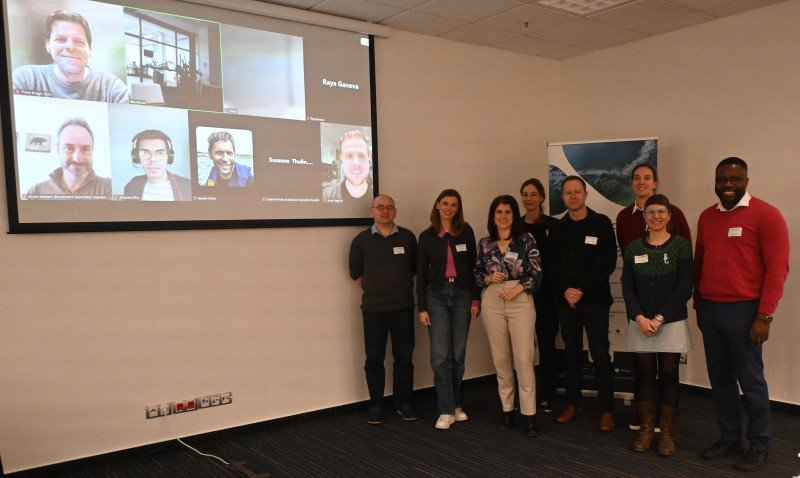
Having entered the second stage of its implementation, FERRO partners, along with a representative from the EC CINEA and an external reviewer, came together on 16–17 March 2026 in Prague to review progress achieved during the first 18 months of FERRO’s duration.
The meeting served as a platform for sharing updates and advancements, where the discussions showcased that during its initial phase, FERRO has established a strong foundation for its work, including the development of harmonised approaches for lake classification and monitoring, as well as the collection of key datasets across Europe.
As the project is expected to establish a range of innovative restoration solutions, the work on some of those technologies and approaches has already been kicked off. Those include the measures in the surrounding catchments, such as reducing nutrient runoff and reusing lake sediments as fertiliser, as well as in-lake interventions like iron-based phosphorus removal, targeted sediment management, and solar-powered pumping and filtration systems. Together, these approaches will help FERRO to improve water quality and recover and reuse in-lake nutrients, supporting more sustainable and circular management of natural resources.
On the second day, the attending members visited one of the five FERRO demonstration sites, Vrchlice Reservoir. The Czech partner, Biology Centre CAS, presented the developed within the context of the project floating platform, which is equipped with a solar-powered pumping and filtration system. The platform is designed to remove phosphorus-rich water and support water quality improvement. As such, this system showcases how innovative, low-energy technologies can be applied in practice to address eutrophication challenges while also enabling nutrient recovery.
On the third day of the meeting, some of the FERRO partners traveled to another demonstration site - the Droda Reservoir in Germany. This visit provided an opportunity to discuss how the innovative restoration solutions being developed within FERRO can be adapted and implemented across different European lakes and catchments.
The meeting was very successful, providing a great opportunity for some of the partners to connect in person and align on the next steps. As FERRO moves beyond its initial phase, with concrete results already emerging and more to come, the project audiences can look forward to a growing range of materials and insights showcasing the project’s outcomes and supporting its further implementation.