FERRO Partners Gather in Denmark for the 2nd General Assembly Meeting
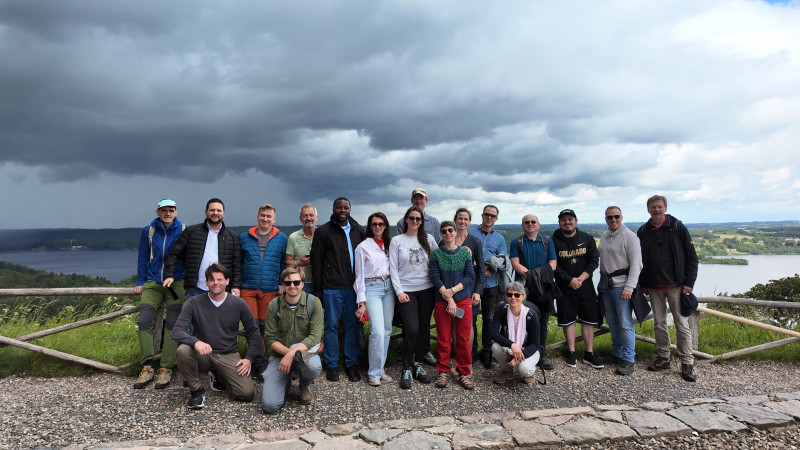
Between 9-11 June 2026, the FERRO consortium successfully held its 2nd General Assembly Meeting in Silkeborg, Denmark, bringing together project partners for three days of scientific exchange, strategic discussions, and field-based learning dedicated to advancing sustainable lake restoration across Europe. Hosted by the University of Southern Denmark (SDU), the meeting provided an important opportunity for partners to review progress, strengthen collaboration, and define the next steps towards achieving FERRO's ambitious objectives.
The meeting opened with welcoming remarks from the hosts, Kasper Reitzel, Theis Kragh, and Anna-Marie Klamt from SDU, who welcomed participants and introduced the programme for the days ahead. The General Assembly also marked an important milestone for the project with the introduction of FERRO's new Associated Regions partners from Romania, Moldova, and Poland. Presented by FERRO Coordinator Tallent Dadi (UFZ), the participation of the Associated Regions further strengthens the project's capacity to promote knowledge exchange and support the replication of restoration solutions across different European contexts.
Scientific discussions throughout the meeting focused on the development and implementation of innovative approaches for nutrient recovery and circular lake restoration. Partners presented progress on recovering nutrients from lake inflows and transforming them into valuable agricultural fertilisers, highlighting the potential of circular economy approaches to address both water quality and resource management challenges. Innovative nutrient management solutions were also showcased, including the use of solar-powered pumping systems designed to remove excess nutrients from lake water and recycle them on agricultural land.
The consortium explored a broad range of scientific and technical topics related to lake restoration. Discussions also addressed the role of remote sensing technologies in supporting lake monitoring across Europe, demonstrating how advanced observation tools can contribute to more effective management and assessment of restoration measures. Alongside the scientific sessions, partners reviewed progress in communication, dissemination, and stakeholder engagement activities, recognising the importance of ensuring that FERRO's knowledge and results reach policymakers, practitioners, local communities, and other relevant stakeholders.
A key component of the General Assembly was the opportunity to connect research activities with real-world restoration challenges through field visits. On the second day, consortium members visited Lake Ormstrup, where partners from SDU presented ongoing restoration efforts and discussed the challenges encountered during implementation. The visit provided valuable insights into ecosystem dynamics, nutrient management strategies, and the practical realities of restoring freshwater systems.
The final day began with a visit to the facilities of the University of Southern Denmark, where participants were introduced to the research environment supporting the institution's contribution to FERRO. The consortium then travelled to Lake Fure, where Theis Kragh guided partners through the lake's history, the environmental pressures it has faced, and the restoration measures implemented over the years. The visit offered an important perspective on long-term lake management and demonstrated the value of evidence-based restoration approaches in improving ecosystem health.
As the 2nd FERRO General Assembly Meeting concluded, partners reflected on three productive days of collaboration, knowledge sharing, and planning. The discussions and exchanges held in Denmark reinforced the consortium's commitment to developing sustainable, circular solutions for lake restoration while strengthening cooperation among project partners and Associated Regions. Looking ahead, FERRO will continue advancing its research activities, testing and refining restoration solutions, expanding stakeholder engagement efforts, and facilitating knowledge transfer across Europe to maximise the project's impact and contribute to healthier and more resilient freshwater ecosystems.