FERRO brings circular nutrient management solutions to COP17 in Armenia
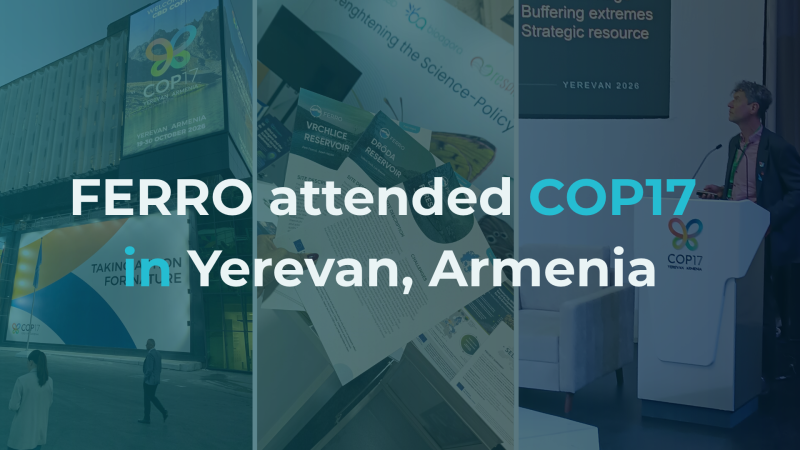
FERRO took part in the 17th meeting of the Conference of the Parties to the Convention on Biological Diversity (COP17), held in Yerevan, Armenia, from 19 to 30 October 2026. Bringing together around 15,000 delegates from across the world, the two-week conference provided an important platform for discussing global biodiversity challenges, strengthening international cooperation and advancing solutions for ecosystem conservation and restoration.
Representing FERRO was Prof. Dr. Karsten Rinke from the Helmholtz Centre for Environmental Research (UFZ), the project's coordinating partner. Karsten participated in two sessions dedicated to advancing biodiversity, water security and resilience in Lake Sevan, one of Armenia's most important freshwater ecosystems. The first took place on 26 October at the Armenian Pavilion in the Blue Zone, followed by a second session on 28 October at the European Union Pavilion in the Green Zone.
During both events, Prof. Rinke presented examples of circular nutrient management and resource recovery developed within FERRO, highlighting how nutrients removed from aquatic ecosystems can be recovered and reused as valuable resources. Drawing on the project's work at the Dröda Reservoir in Germany, he showcased practical approaches that can help address nutrient pollution while supporting more sustainable resource management. He also introduced FERRO's overall objectives and shared information about the project's activities and expected contributions to lake restoration. Participants were invited to explore the project website through a dedicated QR code, providing access to further information about FERRO's work.
COP17 marked an important milestone for international biodiversity governance, with the first global review of progress towards the Kunming-Montreal Global Biodiversity Framework placing the spotlight on the gap between existing commitments and the action needed to achieve its 2030 targets. Discussions also highlighted the importance of strengthening ecosystem protection, improving access to biodiversity financing and ensuring the meaningful participation of local communities in conservation efforts.
For FERRO, participation in COP17 was an opportunity to bring the project's research and practical experience into wider international discussions on biodiversity, freshwater ecosystem restoration and sustainable resource management. By demonstrating how circular approaches to nutrient removal and recovery can contribute to healthier aquatic ecosystems, FERRO continues to support the exchange of knowledge and the development of solutions that connect water protection, biodiversity conservation and the sustainable use of natural resources.